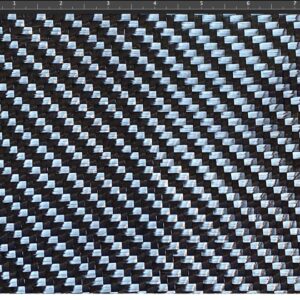
The market for carbon fibre components is ever increasing. Owing to its exceptional mechanical properties and low weight, it has seen use in everything from bicycle frames through to rockets.
The high-tech nature of carbon fibre has put many prospective users off of the material. Yet the barrier to entry for carbon fibre use is lower than typically thought. High-quality hand laminates can be created without complex equipment, meaning that with a bit of skill and understanding entry level DIY users can create carbon fibre components.
Resin Library offers a range of carbon fibre kits (including materials and tools) for prospective users. These carbon fibre kits centre on:
+ Repairs and refurbishments + Laminating + Skinning + Moulding
Q. What does carbon fibre laminating involve?
A. Carbon fibre laminating involves the saturation of carbon fibre fabric in an epoxy resin. Here, carbon fibre fabric is laid out in desired configuration. Epoxy resin (mixed with hardener) is applied to both sides of each sheet. The manner of this depends on whether the goal is to make a mould, to skin an object or to repair an existing carbon component.
Once saturated, the curing time will vary depending on the quantity of hardener used, the type of hardener and the temperature. Once cured, the laminate will be strong, stiff and lightweight and it is at this point that additional surface coating will be performed for both aesthetics and durability.
Q. What materials do I need for carbon fibre laminating?
A. In addition to the carbon fibre fabric, epoxy resin and a suitable hardener, as well as a laminating brush and/or roller are recommended. If moulding is performed, then a release agent is recommended. Peel ply, release agents and masking tape (in the case of repairs) are also is recommended for moulding and other types of laminating.
Surface treatment is also important; various grades of sandpaper as well as solvent-based wipes are recommended to create a suitable surface texture that is also clean and amenable to adhesion.
Q. What is carbon fibre laminating?
A. Laminating is a process in which one or more layers of ply are combined with a resin, creating a composite structure. There are two core resins used for hand laminating: polyester and epoxy and are combined with fibre-based reinforcements to create fibreglass and carbon fibre, for instance.
Q. What is carbon fibre skinning?
A. Carbon fibre skinning is a process in which a layer of carbon fibre is applied to the surface of an object. This can be done for aesthetic or functional purposes, with the latter being to add increased strength to the part.
Carbon fibre skinning can be used to give a car body a more aerodynamic shape, or to improve the strength of a phone case.
Q. How many layers of carbon fibre should I use?
A. This depends entirely on the application.
A single layer of carbon fibre has limited strength. In most cases, multiple layers of carbon fibre ply are used to create a much stronger and more robust composite structure.
Q. How expensive is carbon fibre?
A. Hand laminated carbon fibre components are relatively cheap compared to bespoke, industrially produced ones.
More specialist carbon fibre composites have a higher cost, particularly if larger, more complex scales are involved requiring specialist manufacturing equipment, such as vacuum bags and autoclaves. Further costs are added on if more extensive quality control (QC) testing is required and if fewer components are made (economies of scale reduce prices).
Q. What resins are compatible with carbon fibre?
A. For laminating, epoxy-based resins are used almost exclusively. Other non-epoxy resins may be used for coating carbon fibre. All resins included in carbon fibre kits sold by Resin Library are compatible with the included carbon fibres.
Q. What are the limitations of carbon fibre composites?
A. Carbon fibre has a high stiffness-to-weight ratio and is corrosion resistant, but it is expensive to produce and can be difficult to work with if the project (1) involves complex shapes and structures and (2) a very high quality control standard is required (e.g aircraft components or bicycle frames).
Lay-Up Strategy
Wet Lay-Up
Wet lay-up involves the placement of dry carbon fibre into the mould. Resin is then applied using a brush, roller or spray gun, prior to curing.
This method is the simplest and cheapest to perform, particularly if wet lay-up hand lamination is performed using rollers and brushes. It serves as a quick, robust way to fabricate components and make repairs to existing carbon fibre composites.
There are some limitations; a high-end part that is commercial-grade and/or able to tolerate extreme stress can be difficult to obtain.
Note: the wet hand lay-up method may include vacuum bagging or compression moulding. It may also include the use of prepreg fabric in certain applications.
Prepreg Lamination
With prepreg lamination, the resin is infused in the fibre fabric as part of the manufacturing process. These pre-impregnated sheets are stored at a low temperature to prevent premature curing. For application, plies are pre-cut and applied to the mould, with an autoclave used to initiate curing by an increase in pressure and temperature.
Prepregs are pre-infused with resin. This obviates the need to store resin in bulk and apply it to dry carbon fibre – a process that can be inefficient if performed by hand.
Prepregs are preferred for high-end parts, since the process exhibits less variation and a higher overall standard is obtained. This means there is less wastage and better quality. A downside is the increased cost and need for additional equipment.
Resin Transfer Moulding (RTM)
Resin Transfer Moulding (RTM) involves the insertion of dry carbon fibre into a 2-part mould. The mould is closed shut and resin is infused into the fibrous reinforcement at high pressure. This is an automated process and is often utilised for the scale-out of product manufacture.
Key Parameters
Each Resin Library Carbon Fibre Kit comes with a set of instructions to help users create their own carbon fibre parts.
In each kit, the carbon fibre fabric, resin and associated hardener have all been selected by Resin Library to provide excellent outcomes. Generally, recommended ratios, concentrations and other parameters are based upon manufacturer’s recommendations.
That said, it is also worthwhile to understand the factors which affect the overall performance of the composite. In general, carbon fibre lay-up should be symmetrical, with each lamina presenting the same fibre-resin ratio, thickness and fibre type.
This section is intended to expand on some of these topics to help users understand some of the critical factors involved.
Fibre Volume
The fibre volume fraction (Vf) is defined as the ratio of the volume of fibres to the total layer volume. This metric is the most influential factor affecting composite properties.
In one study by Ali (2018), an increase in fibre content from 40 to 70 % saw an increase in composite strength. However, further increases (> 70%) decreased strength, since less resin was available to ‘wet’ the fibres, causing de-bonding and failure.
For recommended resin-reinforcement ratios, please consult the manuals for each kit. These ranges have been established by manufacturers based on extensive testing. For more sophisticated designs, some users may wish to test samples in advance to determine optimum ratios.
Number of Layers of Laminate
The number of laminate layers required is often dictated by the mechanical requirements of the composite. These typically include cost, weight, laminate quality, strength/stiffness, time laminate quality, equipment availability and expertise.
Lower tow sizes (<6k) equate to thinner carbon fibre, which means that quasi-isotropic laminates can be achieved without adding additional weight.
Nevertheless, research has shown that more layers equate to an overall improvement in mechanical properties. One investigation by Saifullah (2021) considered how the number of layers of 220- and 240-gram cloth affected the mechanical properties in a carbon fibre composite.
Tensile strength was higher per number of layers for 240-gram carbon fibre, with an increase from 115 MPa (3 layers) to 211 MPa (7 layers). A similar (although more variable trend) was observed for 220-gram carbon fibre and ranged across 81 MPa (3 layers) to 185 MPa (7 layers).
For 220-gram carbon fibre, bend strength values saw a decrease steeply from 104 MPa (3 layers) and 100 MPa (4 layers) to around 45 MPa for 5 – 7 layers. The bending strength was more consistent for 240-gram carbon fibre, ranging from 28 MPa (3 layers) to 40 MPa (7 layers).
This was also seen by Rahmani (2013), where the mechanical properties of composites made with 5-ply were improved over 3-ply composites. This brings us to the orientation; the orientation of therefore necessitates several layers, with angle ply orientation having the largest reinforcing effect on mechanical properties.
Note: When making repairs, it is desirable for the mechanical properties of the repair region to match those of the base structure. The feasibility of the carbon fibre repair depends on factors such as safety, expertise and cost.
Fibre Length & Diameter
Standard carbon fibre fabric/cloth exist in a continuous form. This means the fibres have a very high length-to-diameter ratio. These fibres are often stronger and stiffer than bulk material. Fibre diameters typically range from 3-200 μm.
Continuous fibres are available in the form of bundles, referred to as ‘tows’. This is the standard state that carbon fibre is supplied in by Resin Library and allows for more simplistic lay-up and avoids the need to create overlapping joints.
Whisker fibres have much shorter length-to-diameter ratios of 5 < l/d < 1000 and diameters of 0.02-100 μm. Indeed, shorter fibres have also been found to affect specific energy absorption, with shorter fibre lengths leading to higher levels according to Jacob (2005). They are also used in certain carbon fibre repair pastes, given their ease of application and workability. Nanofibres have been shown by Shokrieh (2013) to exert a reduction in thermal residual stress in epoxy-based composites.
Harper (2006) found that shorter lengths improved preform coverage and gave increasingly higher strength whilst modulus was independent of fibre length.
Capela (2017) found that stiffness and tensile strength increased by 25% when the fibre length doubled (from 2 to 4 mm). However, there was a reduction above 6 mm.
Laminate Orientation
Continuous fibre laminated composites are comprised of plies orientated in directions tailored towards load direction.
Laminate orientation has a significant impact on the capacity of a composite to tolerate load. Generally, laminates have either anisotropic or non-anisotropic (typically quasi-isotropic) designs.
Anisotropic Laminates
Anisotropic laminates are unidirectional (0°) and have direction-dependent strengths and stiffnesses. In carbon fibre laminates, if the fibres all oriented in one direction are extremely anisotropic (or unidirectional). This type of orientation generated extremely strong and stiff composites, as illustrated in the video below.
However, in the 90° direction they are very weak, since the load is carried by the much weaker matrix phase (epoxy resin). So whilst a high-strength fibre offers a tensile strength (>500 ksi), the standard epoxy resin matrix phase may only be 5–10 ksi.
This is because longitudinal tension and compression loads are carried by the fibres. Within this, the matrix phase distributes load between the fibres in tension. It creates stability, preventing the fibres from buckling when subjected to compressive forces.
The matrix phase acts as the main load carrier for inter-laminar shear (i.e., shear between the layers) and transverse tension (90°). The relative roles of the fibre and the matrix in determining the mechanical properties are summarised in the table below.
Mechanical Property
Dominating Composite Constituent
Fibre
Matrix
Unidirectional
0° Tension
✓
0° Compression
✓
✓
Shear
✓
90° Tension
✓
Laminate
Tension
✓
Compression
✓
✓
In-Plane Shear
✓
Inter-Laminar Shear
✓
Quasi-Isotropic Laminates
Quasi-isotropic laminates utilise multiple ply orientations so extensional stiffness of the laminate is the same in each in-plane direction. These laminates are made when plies of carbon fibre weaves are oriented at 0º, 90º, +45º, and -45º. A minimum of 12.5% of the plies are orientated in each of these four directions, although quasi-isotropic properties can also be achieved with 0º, 60º, and 120º-oriented unidirectional plies too.
If fibre orientation is balanced, there is a constant strength and stiffness of the material regardless of load direction. As such, this method is preferred for most applications.
Fibre Thickness
Fibre thickness refers to the diameter of individual fibres.
Fibre diameter has several implications for performance. In short:
Mesoscale (1 um – 100 um) sees neighboring fibre interactions, localised stress redictibutions and fibre permeabiltiy issues
Macroscale (> 100 um) sees ply layer interactions, weaving choice variability and weaving damage.
Tow Size
Tow size (k) refers to the amount of carbon fibre filaments in one bundle. Therefore, 1k means 1000 filaments per bundle, 3k means 3000 and so on.
In most applications, low fibre bundles are preferred. Indeed, 3k is considered optimal and a standard option in most Resin Library carbon fibre kits. This is because higher fibre bundles see a reduction in interfacial shear strength (IFSS), a measure of the mechanical properties of a material based on specimen geometry and failure load. This is particularly evident from 9k upwards according to Stojceveski (2018), with 3k and 6k purporting IFSS values of around 43 MPa and 9K to 24K seeing a reduction from 39 to 24 MPa.
This was attributed to poor fibre wettability manifested as localised regions as a result of the inability of the resin to penetrate the thicker tows. Such voids are believed to cause deficits and premature failure. Furthermore, larger tow specimens (18k and 24k) saw high failure rate too, with 2 out of 5 failing under tow splitting. In these the author recommended infusing these tow sizes with resin under high pressure.
Testing
The mechanical behaviour a composite can be evaluated by testing tensile (at varying strain rates and temperatures), flexural (at varying strain rates) and impact.
Scanning electron microscope (SEM) can be used to study the internal structure of the composite and is used to visually see fractures, voids and any fibre delaminating.
Raman spectroscopy has been used to examine differences in carbon composites with different orientations of carbon fibre.
Disclaimer: This content is for general informational purposes only. It does not constitute advice. Resin Library is not liable for any outcomes. The use of information linked to this content is at the user’s own risk. This content not intended to be a substitute for professional advice. Users should not disregard in obtaining professional advice.